We repair residential pressure regulators, checking valve size and access; Oakland International Airport, Paso Robles downtown, and Santa Monica Pier help orient our California service area.
What Can Homeowners Check Before Calling a Pro for Sudden Pressure Loss?
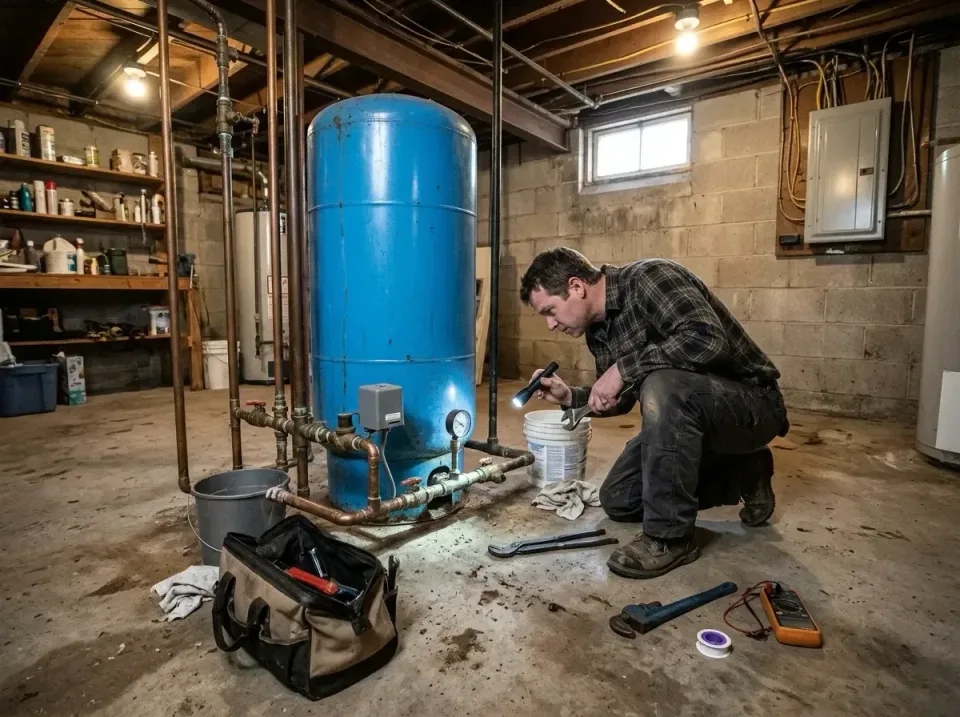
What Should You Check After a Sudden Pressure Drop?
When water pressure drops across several fixtures, check whether the problem is inside your home or affecting the neighborhood before touching plumbing. Try another cold-water tap, ask whether nearby residents have the same issue, and note when the change began. A single weak faucet points to a fixture restriction; several weak fixtures call for a broader look.
In Los Angeles, seasonal irrigation use can coincide with neighborhood pressure changes, so record whether the trouble happens at certain hours rather than assuming a pipe has failed. Desert communities can endure prolonged summer heat, which may raise outdoor water demand; note any timing pattern and avoid repeated tests that waste water. We can use those observations to focus a service call on the likely source.
What Can You Safely Check First?
A sudden weak shower and trickling taps across the house are a reason to check the simple things before opening a wall or adjusting a valve. Confirm that the main shutoff handle is fully open, but do not force a stuck or damaged valve.
Check whether the pressure loss affects hot and cold water, and whether it appears at every fixture or only one. A faucet aerator can collect debris and reduce flow at that tap; if you know how to remove it safely, inspect and rinse it. Keep the parts together. One small piece can disappear fast.
If only one fixture is affected, try its accessible shutoff valves and aerator. If multiple rooms lose flow at once, do not take apart plumbing connections or attempt a regulator adjustment.
Hard water is common in many California communities, and mineral deposits may gradually narrow passages in fixtures or pipes; a sudden change still deserves checking for a new restriction or supply issue. Our crew has seen homeowners focus on the showerhead while a broader supply problem affects every floor. Write down which fixtures are weak and whether appliances running make the symptom worse.
Does the Pressure Drop Point to a Fixture?
Compare a kitchen tap, a bathroom tap, and the shower, testing hot and cold separately. If cold water is normal but hot water is weak at several fixtures, note that distinction rather than assuming the whole-house supply is low.
If the problem is confined to one faucet, an aerator or fixture valve is a sensible first check. When the same loss appears throughout the home, leave the plumbing intact and tell the technician what you observed.
The Griffith Observatory is a familiar Los Angeles landmark, but a hillside home or a long plumbing run not the landmark itself can make fixture-by-fixture observations especially useful. Upstairs fixtures barely flowing while lower taps work points to a different pattern than a single clogged outlet.
We test the system rather than diagnose by sight alone, comparing readings at suitable points and checking how pressure behaves while water runs. For a related symptom, see why upstairs fixtures lose water pressure in Los Angeles homes.
When Should You Stop DIY Checks?
Stop if you find a leak, hear persistent banging, see a damaged pipe, or cannot operate a shutoff without force. Do not remove a pressure regulator, open a pump, or work around electrical equipment.
Those steps can cause leaks or turn a manageable diagnosis into property damage. A safe homeowner check is observation: note the time, affected fixtures, hot-versus-cold difference, and whether running an appliance changes the flow.
At Long Beach Harbor, water infrastructure serves a busy coastal setting; at home, the useful takeaway is still to distinguish an isolated fixture from a whole-house change before choosing a repair. Coastal salt air can accelerate corrosion on exposed outdoor metal, so report visible rust on exterior plumbing rather than scraping or loosening fittings yourself.
If pressure fell abruptly at several taps or keeps changing, arrange a professional assessment. California Plumbing Pros documents the symptoms and explains the likely repair before work proceeds.
What Should You Record for a Service Call?
A concise record helps narrow the cause: when the loss started, whether neighbors are affected, which fixtures changed, and whether hot and cold behave differently. Mention any recent plumbing work, visible leaks, or unusual pump cycling if your home uses a well. Do not guess at a pressure reading unless you already have a suitable gauge and know how to use it safely; an observation is more useful than an unreliable number.
Fresno Chaffee Zoo gives local residents a recognizable Fresno reference point, while hard-water deposits remain a practical household issue across many California communities. If a fixture has gradually lost flow, mention scale or recurring aerator debris; if pressure dropped suddenly throughout the home, say so clearly. Our water pressure testing starts with measured findings, helping separate a fixture restriction from a supply or regulator concern.
Which Check Fits a Sudden Pressure Loss?
Choose the next step by the pattern: one weak outlet is different from low flow throughout the home. Before working beneath a sink, protect the cabinet from drips and set removed parts where they cannot roll away. A homeowner can observe; pipe and regulator work needs a proper diagnosis.
| Option | Best for | Key detail |
|---|---|---|
| Faucet aerator check | One weak faucet | Clear visible debris without disturbing pipe connections. |
| Shower pressure troubleshooting | Shower only | Compare another tap and hot versus cold flow. |
| Regulator diagnosis | Multiple fixtures with unstable flow | Residential regulator connections are commonly 3/4 inch. |
| Water main pressure diagnosis | Sudden loss across the home | A technician checks the supply and system readings. |
| Well pressure tank assessment | Weak flow with frequent pump cycling | Tanks are sized by drawdown capacity. |
A home near the Big Sur coastline may have different access and exposure considerations than one in an inland neighborhood, while Death Valley National Park is a reminder that California conditions vary widely; describe your property and symptoms when arranging an assessment.
A Pressure Gauge Must Match the Test
Pro tip: Static pressure is measured with fixtures closed; flowing pressure is measured while water runs, and the difference can reveal a restriction that a single reading misses. A potable-water gauge reading is reported in pounds per square inch; residential supply commonly falls around 40–80 psi, and readings above 80 psi commonly call for a pressure-reducing valve.
At properties managed near the Anaheim Resort District, service documentation helps managers compare a new complaint with earlier readings and keep a clear record for occupants. California’s drought conditions can increase water-supply restrictions, so record symptoms and avoid wasting water during repeated tests.
Common mistake: Treating one static gauge reading as proof that every fixture receives adequate flow.
Common Questions About Low Water Pressure Repair in California
What Should I Check If Several Faucets Lose Pressure at Once?
If several faucets lose pressure at once, note whether hot and cold water are both affected and check for a visible leak without opening plumbing connections.
How Much Does a Pressure Test Cost After Sudden Pressure Loss?
A pressure test is typically $75–$200, with the final amount affected by access and diagnostic scope. Gauge readings are measured in pounds per square inch, and comparing static with flowing pressure can help identify why pressure drops when appliances run.
Can I Fix Sudden Pressure Loss Myself, OR Should I Call a Plumber?
You can safely inspect an accessible faucet aerator or observe whether the loss affects multiple fixtures, but do not open a regulator or work on pump wiring. California’s State Water Resources Control Board is relevant to water-resource oversight; if the loss spans the home, California Plumbing Pros can test the system and explain the repair path.
Does Coastal Fog Explain a Sudden Pressure Drop at My Faucet?
No, coastal fog that can persist during summer mornings does not by itself establish the cause of a sudden pressure drop. If only one outlet is weak, check its aerator; if several fixtures are affected, record the pattern and arrange Water Pressure Testing rather than attributing the change to weather.
When Does a Clogged Aerator Need Professional Help?
A clogged aerator usually affects one faucet, so rinse accessible debris and compare that outlet with another tap. At places such as UC Davis campus, students and staff may recognize the campus, but the useful household clue is whether neighboring fixtures also have reduced flow; multiple weak outlets need broader diagnosis.
When Should You Call for Sudden Pressure Loss?
If one faucet is weak, start with its aerator or fixture valve; if several rooms lose pressure at once, stop at observation and arrange a system check. Call sooner if you find a leak, damaged pipe, or pressure loss that keeps worsening.
Mineral scale can narrow pipe and fixture passages, so mention any recurring buildup rather than trying chemical or mechanical clearing without knowing the pipe material. Mountain freeze-thaw cycles can stress exposed plumbing, making visible exterior damage worth reporting.
A problem near Fisherman’s Wharf may involve different surroundings than one near Oakland International Airport, but clear symptom notes help either way. Contact California Plumbing Pros for a measured diagnosis and a practical repair path, or begin with Sudden Pressure Loss Repair.
Services Offered
Services We Offer in Los Angeles, CA
Explore related services available in Los Angeles, CA.
We repair residential booster pumps, including pump and control faults; typical repairs run $250–$900 depending on pump type and parts.
Water Pressure Testing compares static and flowing readings for homes and rental properties; typical testing runs $100–$250, depending on access and diagnostic scope.
We trace sudden whole-home pressure loss for California homeowners, checking supply lines and pressure equipment; repair scope and access determine the job price.
Shower Pressure Repair addresses weak shower flow, from showerhead buildup to fixture adjustments; typical repairs run $150–$500, depending on access and parts.
We diagnose weak hot-water flow at faucets and showers, checking heater connections and nearby piping; typical repairs run $150–$600, depending on access and parts.
Water Main Pressure Repair covers buried supply-line leaks and restrictions for homeowners and property managers; typical repairs run $500–$2,500, depending on excavation and pipe damage.
Clogged Pipe Pressure Repair clears flow restrictions in residential pipes; typical jobs run about $200–$1,200, depending on blockage location and pipe access.
Pressure tank repair covers residential well tanks, including air-charge and connection checks; typical repairs run $250–$600 depending on access and parts.
Water Filter Pressure Repair clears restricted housings and cartridge flow for California homeowners; typical jobs run $150–$600, depending on filter type and access.
We repair well pressure tanks for homeowners, checking tank air charge and switch settings; repair costs depend on tank size, parts, and access.
We repair residential well pumps, switches, and pressure controls; pump type, parts, and access shape the job. Typical repairs may run $300–$1,500.
Cities & Towns
Service Areas in Los Angeles
Select a city to find local low water pressure repair providers we cover in Los Angeles.
Calimesa, CA92320Oakland, CA94601Mentone, CA92359Mission Hills, CA93436San Miguel, CA94596Costa Mesa, CA92626Inglewood, CA90305Coachella, CA92236Lawndale, CA90260Santa Ynez, CA93463Placentia, CA92870Irvine, CA92604Lakewood, CA90713Covina, CA91723North Highlands, CA95660Huntington Park, CA90255Del Mar, CA92014Pomona, CA91766Corona, CA92882Santee, CA92071Goleta, CA93117Fountain Valley, CA92708Mather, CA95655Rialto, CA92376
Show all 300 cities
Morro Bay, CA93442Pinon Hills, CA92372Gardena, CA90247Fremont, CA94538Redlands, CA92374Calabasas, CA91302Chino, CA91710Mission Viejo, CA92691Ladera Ranch, CA92694Cambria, CA93428Solana Beach, CA92075Malibu, CA90265Aliso Viejo, CA92656Beaumont, CA92223Laguna Beach, CA92651Temecula, CA92591Stanton, CA90680Weldon, CA93283Valley Center, CA92082Lincoln, CA95648Montclair, CA91763Santa Clarita, CA91350Fair Oaks, CA95628Fullerton, CA92832South Gate, CA90280La Mirada, CA90638
Get a Quote
Get a Low Water Pressure Repair Quote in Los Angeles, CA
Share job details below or call our team directly. Phone: (877) 773-0781