We repair residential pressure regulators, checking valve size and access; Oakland International Airport, Paso Robles downtown, and Santa Monica Pier help orient our California service area.
Could a Watts Pressure-Reducing Valve Cause Pressure Drops When Appliances Run?
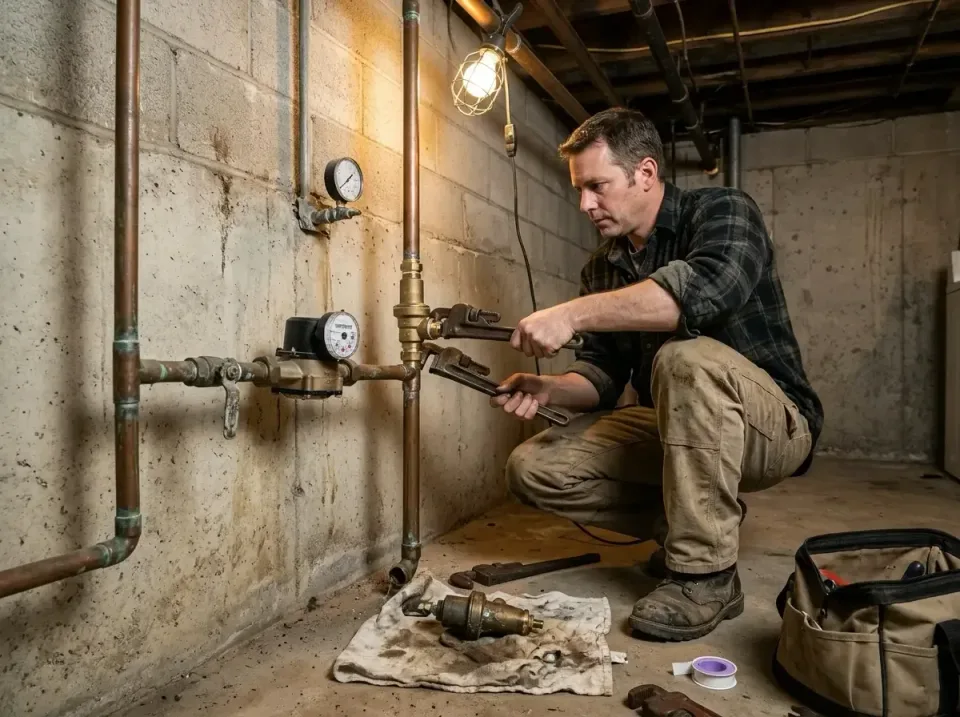
Can a Watts Valve Cause Pressure Drops When Appliances Run?
Yes a Watts pressure-reducing valve can contribute to a pressure drop when a washer, shower, or other fixture draws water, especially if the valve is restricted or failing. The symptom alone does not prove the regulator is at fault; a well system can also lose flow when its pump cycles frequently or its tank is not keeping up.
That distinction matters: repeated cycling can interrupt everyday tasks and point to a pump-side issue rather than a valve adjustment. One unrelated call we sometimes hear is a request for a local cleaning company; that is a different trade, so confirm the service you need before booking.
Another caller described a very small private-house job, where limited access can still affect the diagnostic work. In California, our crew tests before recommending a repair.
Why Does a Watts Valve Affect Flow Under Demand?
A regulator can hold acceptable pressure with every tap closed yet restrict the amount of water available once an appliance starts drawing it. We check its response under demand before changing the adjustment; turning the screw without readings can leave the home with poor flow or excessive pressure.
A residential regulator connection is commonly 3/4 inch, but connection size alone does not establish that the valve is faulty. The valve’s condition, setting, and the rest of the supply path all matter.
California’s Mediterranean climate brings wet winters and dry summers, but seasonal weather does not diagnose a regulator. We look at the plumbing itself.
Near the Golden Gate Bridge, San Francisco, the landmark offers a familiar point of reference for our statewide service area not a claim that every home has the same plumbing conditions. For a related symptom, see why upstairs fixtures lose water pressure in Los Angeles homes.
Which Checks Separate a Bad Regulator from Another Restriction?
We compare pressure before and after the valve, then watch what happens when water is flowing. That helps show whether the pressure change occurs across the regulator or farther along the supply.
Building riser checks can be useful in multi-story homes: a loss higher in the system may point to a distribution issue rather than a regulator at the service entry. Fixture-by-fixture checks add another clue.
If just one tap is weak, the restriction may be local; if several fixtures fade together, we widen the inspection.
We also use leak-aware troubleshooting. A hidden leak or damaged line can divert water and imitate a regulator problem, so we look for signs of water loss before recommending a valve replacement. If the hot side alone is affected, the regulator may not be the cause; our guide to low hot water pressure in California explains that separate symptom.
When Should a Regulator Be Adjusted or Serviced?
Adjustment makes sense only when testing indicates the valve’s setting is wrong and the regulator still responds properly. A worn, stuck, or internally restricted valve may need service instead; changing its setting will not correct a failed mechanism. We explain the readings and proposed work before proceeding, rather than treating every appliance-related drop as proof that the Watts valve needs replacement.
A booster pump is a different remedy from a regulator. The regulator controls pressure entering the home, while a booster pump may be considered when the supply itself cannot provide adequate pressure.
Installing a pump without finding the cause can add equipment without fixing a restriction, leak, or failing valve. We compare those possibilities with the actual flow symptoms and the property’s plumbing layout.
When Is DIY Troubleshooting Enough?
A homeowner can note which fixtures lose flow, which appliances are running, and whether the problem affects hot water, cold water, or both. That symptom log is useful.
Avoid adjusting or dismantling a pressurized valve if you cannot verify the result safely; a mistaken change can affect pressure throughout the home. If the drop happens across multiple fixtures or the valve area shows signs of leaking, have a plumber test the system.
Our crew has spent more than 12 years serving California and starts with measurements, not guesses. For a closer look at the diagnostic process, read about Water Pressure Testing. We explain what the test shows and outline a practical repair path before work proceeds.
Which Repair Fits a Watts Valve Pressure Drop?
The right option depends on where pressure falls and whether the problem appears only during water use. A regulator repair addresses a valve that cannot control pressure properly; a booster pump addresses inadequate incoming supply, while a well pressure tank serves a different role in pump-fed homes.
| Option | Best for | Key detail |
|---|---|---|
| Regulator repair | Unstable or restricted flow traced to the valve | Residential connections are commonly 3/4 inch |
| Booster pump | Supply that remains inadequate after diagnosis | Check pump cycling and controls before selecting equipment |
| Well pressure tank repair | Frequent pump cycling in a well system | Tank capacity is selected by drawdown, not appearance |
| Pressure testing | Determining where the loss occurs | Compare readings with fixtures closed and water running |
A tank can reduce pump cycling when correctly matched to the system. Testing under both conditions helps prevent replacing the wrong component.
What Regulator Test Do Plumbers Check First?
Pro tip: We first compare the regulator’s response at rest and while water is being used; a setting change is not the same as a valve that has failed internally. If the home is on a well, repeated pump cycling can shift attention to the pressure switch and tank rather than the Watts valve. Removed brass pressure regulators can also provide clues about wear or internal obstruction, but the replacement decision should follow system testing, not appearance alone.
Common mistake: Turning the adjustment screw before recording the system’s symptoms and readings.
Keep track of which fixtures are running when the pressure falls, then share that pattern with the plumber.
Common Questions About Low Water Pressure Repair in California
Can a Watts Valve Cause a Pressure Drop Only When the Washing Machine Runs?
Yes, a restricted regulator can show its limits when the washer draws water, though a supply-line restriction can produce a similar symptom.
How Much Is a Booster Pump Installation If a Watts Valve Is Not the Problem?
A residential booster pump installation is $800–$2,500, with capacity and electrical work affecting the estimate. California Plumbing Pros can first test the supply and regulator so you can judge whether a pump is appropriate; final quotes vary by repair scope, access, parts, and site conditions.
Can I Adjust My Watts Regulator Myself When Appliances Cause a Pressure Drop?
No, not as a substitute for diagnosis: an adjustment will not repair a valve that has failed or a restriction elsewhere. You can record which fixtures and appliances trigger the drop, then have a plumber verify the system before changing the setting.
Do California Rules Apply When Replacing a Pressure-Reducing Valve?
California Plumbing Code, Title 24, Part 5, is relevant to plumbing work, and permit needs depend on the work and local authority. Ask the plumber to explain the applicable requirements for your job; Los Angeles plumbing permits, when required there, go through LADBS.
Should I Get Water Pressure Testing If Several Appliances Cause a Pressure Drop?
Yes, if the drop affects multiple fixtures or appliances, testing can help distinguish regulator trouble from a broader supply issue. California Plumbing Pros can compare system behavior and explain the findings; post-repair verification then checks whether the flow problem has improved.
Get a Clear Pressure Diagnosis Before Replacing Parts
A Watts pressure-reducing valve can contribute to weak flow when appliances run, but a pump, tank, leak, or another restriction may create the same complaint. Testing the system under actual demand is the practical way to narrow it down.
Our building-wide pressure troubleshooting considers how the fixtures behave together, so you get an explanation tied to the symptoms rather than a blind adjustment. Winter atmospheric rivers can bring flooding and runoff in parts of California; if weather or water intrusion coincides with a pressure change, mention that when arranging an inspection.
For careful plumbing pressure diagnosis, contact California Plumbing Pros and ask about Pressure Regulator Repair.
Services Offered
Services We Offer in Los Angeles, CA
Explore related services available in Los Angeles, CA.
We repair residential booster pumps, including pump and control faults; typical repairs run $250–$900 depending on pump type and parts.
Water Pressure Testing compares static and flowing readings for homes and rental properties; typical testing runs $100–$250, depending on access and diagnostic scope.
We trace sudden whole-home pressure loss for California homeowners, checking supply lines and pressure equipment; repair scope and access determine the job price.
Shower Pressure Repair addresses weak shower flow, from showerhead buildup to fixture adjustments; typical repairs run $150–$500, depending on access and parts.
We diagnose weak hot-water flow at faucets and showers, checking heater connections and nearby piping; typical repairs run $150–$600, depending on access and parts.
Water Main Pressure Repair covers buried supply-line leaks and restrictions for homeowners and property managers; typical repairs run $500–$2,500, depending on excavation and pipe damage.
Clogged Pipe Pressure Repair clears flow restrictions in residential pipes; typical jobs run about $200–$1,200, depending on blockage location and pipe access.
Pressure tank repair covers residential well tanks, including air-charge and connection checks; typical repairs run $250–$600 depending on access and parts.
Water Filter Pressure Repair clears restricted housings and cartridge flow for California homeowners; typical jobs run $150–$600, depending on filter type and access.
We repair well pressure tanks for homeowners, checking tank air charge and switch settings; repair costs depend on tank size, parts, and access.
We repair residential well pumps, switches, and pressure controls; pump type, parts, and access shape the job. Typical repairs may run $300–$1,500.
Cities & Towns
Service Areas in Los Angeles
Select a city to find local low water pressure repair providers we cover in Los Angeles.
Burbank, CA91502Colton, CA92324Torrance, CA90503Huntington Park, CA90255Perris, CA92571Elk Grove, CA95758North Highlands, CA95660San Marino, CA91108Sacramento, CA95816Chula Vista, CA91913Highland, CA92346Yucca Valley, CA92284Moreno Valley, CA92553Fallbrook, CA92028Artesia, CA90701Arcadia, CA91006El Cajon, CA92020El Monte, CA91732Granite Bay, CA95746Big Bear City, CA92314Oak Park, CA91377Wildomar, CA92595Chino Hills, CA91709Adelanto, CA92301
Show all 300 cities
Lake Forest, CA92630Newport Beach, CA92625Orangevale, CA95662Cypress, CA90630Riverside, CA92506Seal Beach, CA90740Ojai, CA93023Agoura Hills, CA91301Fountain Valley, CA92708Winchester, CA92545Desert Hot Springs, CA92240Downey, CA90241Blythe, CA92225Garden Grove, CA92844Aliso Viejo, CA92656La Mirada, CA90638Indian Wells, CA92210Fullerton, CA92832Tehachapi, CA93561Rancho Santa Margarita, CA92688Murrieta, CA92563Buellton, CA93427Dana Point, CA92629Dublin, CA94568Alhambra, CA91801Pinon Hills, CA92372
Get a Quote
Get a Low Water Pressure Repair Quote in Los Angeles, CA
Share job details below or call our team directly. Phone: (877) 773-0781